If you’re new to prepping, figuring out where to begin can feel overwhelming. I can totally relate—I feel like I’ve been working on survival planning forever, and I still feel like a beginner! This guide simplifies the process and provides us with a solid foundation for our journey into emergency preparedness. Here are 12 practical tips to help us get started in 2025.
1: Focus on the Basics
Your fundamental needs—like water, food, and hygiene—remain consistent regardless of the emergency. Start by gathering everyday essentials you’ll need in any scenario. Once you have a foundation, you can build from there.
Please note that this post contains affiliate links, meaning I will get a small commission for qualifying purchases at no extra cost to the buyer.
2: Start with Two Weeks of Supplies
A great starting goal is to have enough supplies for two weeks of self-reliance. This milestone is achievable for beginners and creates a strong base for expanding your stockpile as you progress.
3: Prepare for Local Risks
Understand the specific risks of your region. For instance, Californians may prioritize earthquake kits, while those in coastal Florida might prepare for hurricanes. Once you’ve covered basic essentials, customize your supplies to address the disasters most likely to impact your area.
Read and Learn: Beginner Guides: Emergency Scenarios
4: Prioritize Water Storage
Water is critical for survival—you can only last about three days without it. Aim to store at least one gallon of drinking water per person daily, plus an extra gallon for hygiene and cooking needs.
Start small with store-bought water containers and gradually invest in larger storage solutions. Don’t forget water purification tools, such as tablets or personal filters, to ensure access to clean water in any situation.
Water Purifier Survival, Emergency Preparedness for Camping, Hiking, Travel, Hunting, and Family Outing
About this item:
- SGS Certified with Test Report NBF23-0012700-03. Each filter meets strict quality standards and undergoes regular performance testing, ensuring reliable performance when needed.
- It protects against over 99.9999% of harmful substances and removes the smallest microplastics found in the environment, down to 0.1 microns.
- Provide up to 1,300 gallons of clean drinking water per unit with proper use and maintenance, ensuring a sufficient supply for an individual for over five years.
- Measuring 1.6" in diameter and 8.2" in length and weighing only 3.5 ounces, it seamlessly fits any standard 28mm threaded water bottle and can also be attached to standard gravity hoses.
- With a powerful suction boasting a maximum flow rate of 600ml/min, clean water can be effortlessly and quickly obtained.
- No expiration worries with unlimited shelf life, always ready in your emergency go-bag.

5: Build a Food Stockpile
Focus on non-perishable, shelf-stable foods that your family enjoys. Buy a little extra each time you shop to build your supply gradually. Organize your pantry, date your items, and rotate them to prevent waste.
Stock a variety of items:
- Canned goods: Vegetables, fruits, soups, and beans
- Dry foods: Rice, oats, cereals, and nuts
- Long-term options: Freeze-dried meals and MREs
Remember to have a way to cook without power, such as a camp stove.
Features:
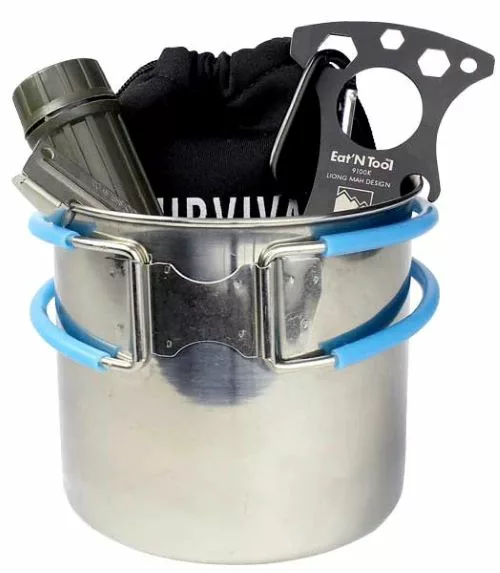
- Survival Cooking: The waterproof matches and pocket stove included in the kit can help you start a fire for meal prep, no matter the weather conditions.
- Camping Cup: The camping cup doubles as a cup or a pot to prepare food.
- Multi-tool Spork: The 7-in-1 tool weighing just 1.5 oz can be used as a bottle opener, hex wrench (6mm, 8mm, and 10mm), flat head screwdriver, spoon, or fork. Saving you space when you need it most.
- Lightweight & Compact Kit: This compact kit weighs only 8.7 ounces. The green ripstop fabric bag allows you to pack this compact kit and bring it anywhere.
Includes:
- 1 - P-38 Can Opener
- 1 - Set of Waterproof Matches with Container
- 1 - Survival Frog Pocket Stove with Fuel Tablets
- 1 - Spork Survival Tool
- 1 - Stainless Steel Camping Cup
- 1 - Green Ripstop Fabric Bag w/ Drawstring & Clasp
6: Learn Food Sourcing and Preservation
Once your stockpile is established, enhance your prepping skills by exploring gardening, fishing, hunting, and foraging. Learn food preservation methods like canning, dehydrating, and pickling to increase your long-term food security.
Read This: Beginner Guides: Needs Evaluation
7: Prepare for Hygiene Needs
In a crisis, hygiene items can disappear from shelves quickly. Stock up on essentials like:
- Toilet paper
- Soap and toothpaste
- Feminine hygiene products
- Baby wipes
If plumbing is unavailable, plan for waste management. Consider options like a bucket toilet or other off-grid waste disposal solutions.
8: Brush Up on First Aid Skills
Having first aid supplies is crucial, but knowing how to use them is even more critical. Learn basic skills such as:
- Performing CPR
- Dressing wounds
- Using a tourniquet
Being prepared to handle medical emergencies can save lives when professional help isn’t immediately available.
9: Plan for Power Outages
Power outages can happen for many reasons. Stock up on:
- Flashlights (one for each family member)
- Extra batteries
- Lanterns, candles, and lighters
If possible, invest in a solar generator or power bank to charge small devices during extended outages.
PD 60W Fast Charging Backup Lithium Battery Pack Power Supply.
4.8+ Star Rating!
【Massive Capacity, Lightweight Presentation】1000W (2000W surge) pure sine wave supports most laptops, tablets, phones, lights, fans, CPAP medical devices, projectors, TVs, mini-refrigerators, speakers, cameras, etc. 999Wh's huge capacity only weighs 17lbs!
【Upgraded Battery Management System】It stops charging any device automatically when it's full; it offers short-circuit and power-surge protection for always-on electronics. The same battery management system applies when charging the generator with solar power, ensuring none of the circuits get fried. It keeps itself from overheating via dual cooling fans.
【USB-C PD 60W, USB-A QC 18W】PD60W twice-as-fast charging for phones, tablets, laptops for USB-C ports, and ultra-high efficiency in emergencies. All USB-A ports are quick-charge 3.0 18W.
【Power 10 Devices simultaneously】Equipped with 2*AC output, 1*USB-C PD 60W output, 3*USB-A QC3.0 18W outputs, 1*Wireless Charger, 1*Car port, 2*DC outputs. GRECELL solar generator can power up to ten devices at the same time.
【3 Ways To Recharge, Built-in MPPT Controller】GRECELL power station can be charged via an AC outlet, a solar panel, or a car outlet. Built-in MPPT (Maximum Power Point Tracking Control) so it can extract the maximum power from the solar panel, optimizing the utilization of variable power sources like a solar generator.

10: Stay Connected Without a Cell Phone
Cell phones might not always work during emergencies. A basic emergency radio can inform you about weather alerts and other critical updates. Consider a HAM radio for advanced communication, which allows two-way communication in emergencies (no license required during crises).
11: Plan for Mental Well-Being
Emergencies can be stressful. Don’t forget to include items that provide comfort and entertainment, like:
- Books, cards, and board games
- Small treats like chocolate or snacks
These small touches can help maintain a sense of normalcy for you and your family.
12: Prepare for Mobility
In some situations, staying home may not be an option. Prepare a “bug-out bag” with essentials like:
- Water and portable food
- Hygiene items and a change of clothes
- Survival tools (multi-tool, flashlight, fire-starter)
Ensure it’s packed and ready to go at a moment’s notice.
Preparing Made Easy.
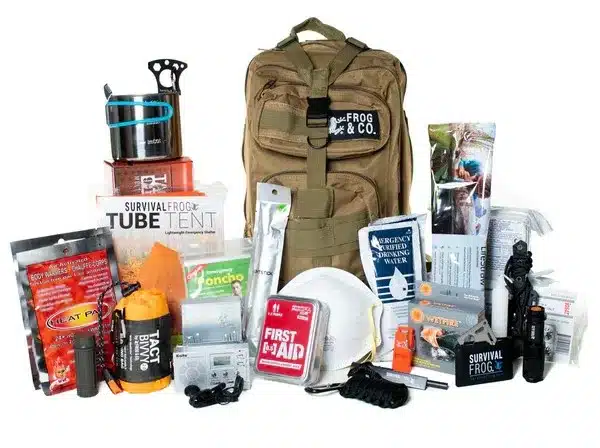
This Built-for-You Bug Out Bag Includes:
- LifeShield® Bug Out Backpack (Tan or Black)
- Warmth & Outdoor Shelter Kit
- Emergency Food & Water Kit
- Mess Kit by Survival Frog
- Emergency Light & Communications Kit
- Disaster Survival Essentials Kit
- First Aid Kit
Elite All-in-One Emergency Bug-Out Bag
This pack is JAM-PACKED with critical survival gear. We’ve done all the work for you – it’s the bug-out bag you know you need but haven’t had time to build yourself. Explicitly designed for preppers and survivalists, this comprehensive all-in-one B.O.B. contains 6 different survival kits totaling 27 unique pieces of high-quality gear for all your survival needs. Food and water, emergency tools, fire-starting essentials, shelter, lighting, and more – this pack is chock-full of survival gear to give you confidence and assurance you can tackle any crisis. This B.O.B. is a one-stop shop and grab-and-go ready.
Peace of Mind Through Preparedness
Prepping is no longer about bunkers and extreme scenarios. Recent events—from pandemics and supply chain disruptions to natural disasters—have shown us the value of being prepared. By starting with these practical tips, you’ll gain peace of mind from knowing you’re ready for the unexpected.
Have you prepared for emergencies? Do you feel like you are a

I’m the daughter of 2 original survivalists who moved from the north to sunny Florida. My mother, along with her parents, bought 30 mostly uncleared acres in 1938. The first home was made of pecky-cypress and built by a house-raising. My mother raised 10,000 chickens.
My divorced mother met and married my father in 1948. From pine trees on our property, he hand-built a log cabin. He also built a tarpaper-lined 65’x45′ pool with duck pond overflow. We had an artesian well for our water and powering our hand-built waterwheel for the pool. He built a substantial cantilevered roof workshop with a car pit in the massive cement floor.
Since my early teens, I have read a ton of books about survival, prepping, the bomb, an apocalypse, homestead living, and SHTF situations. As an adult, I continue to read sci-fi, survival prepping, and science. I practice a prepper lifestyle albeit a bit modified, read a lot, buy a lot, pack/store a lot of anything survival related.
Read my About Me post for more details on our self-sufficient living. I lived there until I went to college in 1968.
My SurvivalPrepperSupply.com blog strives to educate individuals on coping with natural and human-caused disasters using article posts about preparing for emergencies.