What Will It Look Like in the Future?
Embarking on your survival-prepping adventure is an exciting experience, but taking it very seriously is also crucial. Once upon a time, this realm was predominantly occupied by rugged outdoorsmen and dedicated survivalists, but today, it’s gaining popularity among families from all walks of life.
Remember, you’re not alone in this pursuit. Embrace the journey, gather knowledge, and equip yourself with the necessary skills to thrive in challenging situations.
Related – Survival Prepping 101: Your Unique Action Plan
Your family’s safety and security are in your hands, and with careful planning and preparation, you’ll emerge stronger and more united than ever before.
Life is full of twists and turns, and you never know what’s around the corner. One day, you might wake up to a natural disaster or a power outage; the next thing you know, you’re dealing with a financial crisis. Stay positive and focused on what you can control during these difficult times. Remember, you’re not alone; some people will help you.
If you learn how to prepare correctly, you’ll be ready for anything. Some people only prepare for short periods, like if their power goes out for less than a day.
Please note that this post contains affiliate links, meaning I will get a small commission for qualifying purchases at no extra cost to the buyer.
Preparation is crucial when facing major life events. Being prepared can alleviate fear and uncertainty, allowing us to approach these events confidently.
Related: Long-Term Survival Training in a Conflict Zone
If you’re new to prepping, getting started can be overwhelming. But don’t worry, you don’t need a big budget or special training to take the first steps. What you do need is a plan of action.
So, start small and create a roadmap to preparedness. Remember, every little step counts towards building a stronger, more secure future for you and your family. So, don’t delay. Embrace the journey of becoming a survivalist today.
Step #1: Conduct a Survival Risk Assessment to Identify Potential Risks
Before diving into the shopping spree and picking up new tricks, you gotta take a step back and assess your risks. After all, every family’s prepping game is different depending on where they live. So, let’s get real about what you truly need to survive. Don’t be afraid to think outside the box and tailor your strategy to suit your specific needs. Remember, preparation is key, and with careful thought and planning, you’ll be ready to take on whatever challenges come your way.
Related – Basic Survival Gear Checklist
Don’t let pop culture scare you into thinking a zombie apocalypse is just around the corner. Sure, it’s fun to imagine yourself fighting off hoards of zombies, but in reality, the more likely scenarios are natural disasters, power outages, or your own personal emergencies. Instead of worrying about the undead, focus on being prepared for the things that could actually happen to you.
[lasso id=”2746″ link_id=”2758″ ref=”southern-survival-battlbox-com”]It’s easy to get caught up in thinking about large-scale disasters, but don’t forget about the potential for a personal financial crisis. Having contingency plans to help weather the storm is a good idea. Remember, you’re not alone, and with careful planning, you can overcome any financial challenge that comes your way.
Read this – How to Freeze-Proof Your Water Stockpile
It’s natural to prioritize planning for the events that are likely to happen, like tornadoes or hurricanes. However, it’s also important to be prepared for unlikely events like major wars. While we can’t predict when or where such conflicts will occur, we can take steps to stay informed and stay safe. Preparation is key, and it’s always better to be safe than sorry. So, let’s make a conscious effort to plan for the most likely scenarios while keeping an open mind for unexpected challenges.
Disasters don’t always come in the form of hurricanes or earthquakes. Sometimes, life throws us curveballs. It could be a shaky job, a rocky relationship, or a medical condition. It’s easy to feel like everything is falling apart when these things happen. But it’s important to remember that you’re not alone. Millions of people have faced similar challenges, and they’ve come out stronger on the other side. So, take a deep breath, and let’s tackle this together.
You have a lot on your plate, my prepper friend. It’s not just about ensuring you have enough toilet paper and groceries to last a while. It’s about taking a step back and assessing your overall well-being. Your finances, physical and mental health, and other stress areas are all essential factors to consider. But don’t worry, you can do this! By taking a deep breath and prioritizing your list of concerns, you’ll be able to gather the resources you need to survive this storm. Remember, you’re not alone. We’re all in this together.
Step #2: Set Both Short and Long-Term Survival Prepping Goals
When you begin mapping out your plans, you want to set goals for both short-term and long-term survival situations. Short-term plans are more straightforward to prepare because you only want to get through a few hours, days, or weeks.
Read this – Emergency preparedness checklist: Prepping for beginners
This doesn’t require much in terms of supplies, and you’ll be able to save that up quickly and easily and use it as a stepping stone to your long-term survival plans. You can start by making a 24-hour plan and move on to a 72-hour, one-week, and one-month short-term proper process.
For these, you’ll be looking at just having enough supplies on hand so that if you can’t get to the store or if electricity is off for that period, you have enough to tide you over.
[lasso id=”2739″ link_id=”2759″ ref=”wise-company-60-serving-entree-grab-and-go-food-kit-battlbox-com”]Long-term planning is more complex and requires different types of supplies and gear. For example, instead of having enough cans of food, you’ll want to know how to grow a survival garden and can your own food.
Step #3: Map Out a Budget and Shopping Strategy for Your Prepping Efforts
You should have a budget that doesn’t cause you to charge up your credit cards but instead allows you to use up whatever you have left over at the end of the month for savings and survival shopping.
Related – Organize Your Finances – Survival Prepping Basics
You want to make sure your dollar goes a long way when shopping, and that doesn’t always mean shopping for cheap supplies, but buying at the right time and in bulk whenever possible.
[lasso id=”2743″ link_id=”2760″ ref=”outdoor-subscription-box-survival-subscription-box-battlbox-com”]Learn where to buy from so that you aren’t wasting money spending your shopping hours at the wrong location with higher prices. Look for discounts that can give you more for your money and prioritize your spending.
Step #4: Assemble Your Family Bug Out Bags
The next step is to go ahead and assemble a bug-out bag for each member of your family. Usually, these are set up to help you exist for at least 72 hours in the wild, and you can have one at your home, one in your car, and one at work.
Related – How to Pack a Bug-Out Bag
Related – Survival Prepping 101 Series Part 4 – Survival Bug-out Bag Contents
Make sure you choose a bag that is comfortable and durable for each member of your family. You want to adjust the load according to the size of the person having to carry it. Each bag should include food, water purification, first aid, shelter, hygiene products, and communication items such as a whistle.
Step #5: Begin Acquiring Your Survival Supplies
At this point, you will begin acquiring all of your survival supplies that you will keep at home. You need to have the bug-out bags ready if you need to leave your property, but the bulk of your survival supplies will be kept at your homestead.
Related – Medical and First Aid Supplies for Your Survival Kit
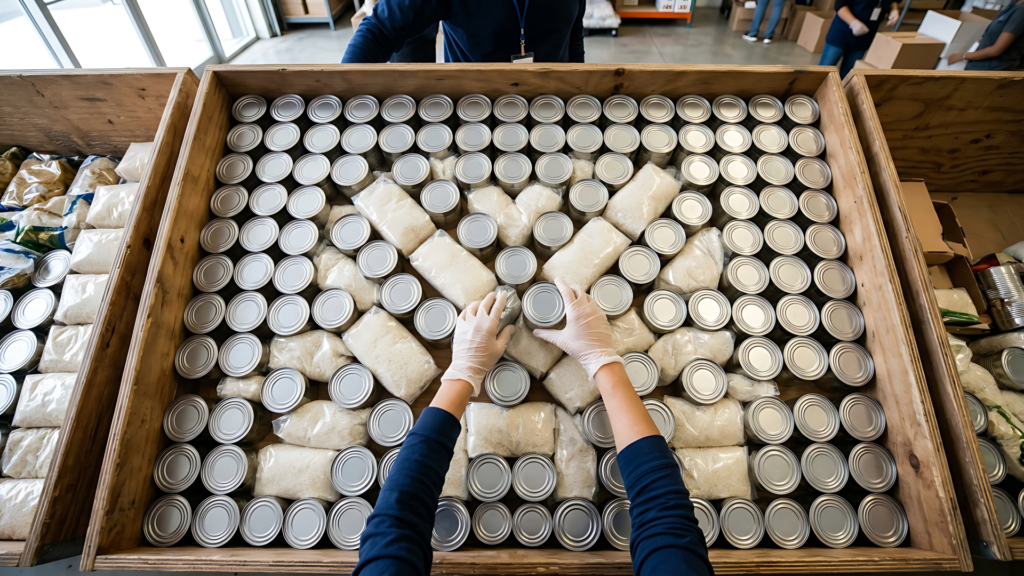
Start with the essentials that are needed, such as water and water purification methods and food. You can stock up on short-term survival items such as canned produce, but if you invest in dehydrated food, you’ll have a longer shelf life, where the food will be stable for up to 25 to 30 years.
With things like water, you want to have some on hand, but it does take up a lot of space, so you will need water purification tablets or straws. You’ll already be in your shelter, but you may need items to help you stay warm or cool off if the grid goes down.
[lasso id=”2741″ link_id=”2761″ ref=”aquapodkit-emergency-water-storage-battlbox-com”]You’ll also need things for lighting inside, and you don’t want to rely only on flashlights with batteries, so look for solar lanterns that you can use once the sun goes down.
You’ll also need a way to cook your food, so you’ll need some sort of fire-starting gadgets and methods of cooking that may include solar versions. Because you’ll have supplies inside, you’ll want to consider your personal protection and security in case any unsavory individuals try to breach your property.
Step #6: Carve Out Time to Learn Essential Survival Skills
The next step in your survival journey is learning skills you may need in a survival event. This takes time and isn’t something you’ll know how to do overnight.
It’s also not something you want to leave in a book for whenever you’re in a SHTF situation. By then, it’s too late. Start by learning first aid – for both minor and major issues.
You may also need to learn how to get food through fishing, hunting, or foraging in your location. Learn how to do these things with and without supplies because you don’t know when or if you’ll be without them.
Read this – 7 Assumptions That Can Get You Killed When SHTF
You’ll also need to know skills for repairing your home, car, appliances, and even mending clothing. You may not be able to get new ones or even call a service person out to help you.
Any skill you may need, such as navigation without a GPS, how to make a fire, how to defend yourself without a weapon, and more, are essential – and not just for you – but for your entire family.
Step #7: Create a Record for Rotation and Safeguarding of Your Supplies
Lastly, make a record of your supplies and gear. You want to rotate (whenever necessary) your supplies so they don’t go to waste. Things such as canned produce must be used up before the expiration date.
Read this – How to Store Flour So It Lasts Over 10 Years
You want to record everything you buy for survival purposes and where it’s located. Laminate your list and have a backup in case it gets ruined by anything like a fire or water damage.
By having a record, you won’t have to remember whether or not you already bought a manual can opener – you’ll know that you did and exactly where you stored it in case the grid is down and you need to feed your family.
With food and medication, ensure you also accurately log the expiration date, amount, and name. Periodically go through and weed out any expired supplies so that you can replace them.
These steps will give you a solid beginning to your

I’m the daughter of 2 original survivalists who moved from the north to sunny Florida. My mother, along with her parents, bought 30 mostly uncleared acres in 1938. The first home was made of pecky-cypress and built by a house-raising. My mother raised 10,000 chickens.
My divorced mother met and married my father in 1948. From pine trees on our property, he hand-built a log cabin. He also built a tarpaper-lined 65’x45′ pool with duck pond overflow. We had an artesian well for our water and powering our hand-built waterwheel for the pool. He built a substantial cantilevered roof workshop with a car pit in the massive cement floor.
Since my early teens, I have read a ton of books about survival, prepping, the bomb, an apocalypse, homestead living, and SHTF situations. As an adult, I continue to read sci-fi, survival prepping, and science. I practice a prepper lifestyle albeit a bit modified, read a lot, buy a lot, pack/store a lot of anything survival related.
Read my About Me post for more details on our self-sufficient living. I lived there until I went to college in 1968.
My SurvivalPrepperSupply.com blog strives to educate individuals on coping with natural and human-caused disasters using article posts about preparing for emergencies.