How to Keep Your Electronics Running during Blackouts
Maintaining electronic functionality during blackouts demands backup power and energy conservation. The goal is to keep essential devices working, providing communication, information, and light. I’m lucky to have a husband who is very knowledgeable about electronics. He fixes almost anything, including installing anything electronic. I have his picture in another post showing him standing next to his radios, which he has fixed.
Begin by identifying your critical electronic needs. Prioritize radios, phones, lighting, and medical devices. Uninterruptible Power Supplies (UPS) protect sensitive electronics from power surges and provide short-term backup. We have a UPS attached to our network, one for our satellite, and one in my bedroom. The one in my bedroom will keep my TV provider active for an hour. I don’t have my TV monitor on it, though. It’s too far away. Oh, well…
Related: Building a DIY Emergency Solar Power System
Choose a UPS with enough wattage and battery capacity to power your devices for a reasonable time. Connect computers, routers, and medical equipment to the UPS.
Portable power stations combine a battery, an inverter, and charging ports. Choose a power station with adequate capacity and output. These devices can be recharged using solar panels, car chargers, or wall outlets. We can add our portable power stations to be powered by our generator when needed.
Generators provide a stronger backup power source. Use a portable generator that’s easily moved and refueled. Choose a generator with enough wattage to power your devices and appliances. We have three generators – a diesel, a gas-powered, and a solar generator.
Ensure you have enough fuel and store it safely. Solar power systems offer a sustainable energy source. Install solar panels and a battery bank to store energy.
Related: Grid-Down Disaster? Nine (9) Things You Need for Survival Prepping
Use a portable solar generator for easy setup. Size your solar system to meet your energy needs. Car batteries can provide temporary power. Use a car battery inverter to convert the car’s DC power to AC power.
Be careful when using car batteries, as they drain quickly and need ventilation. Battery-powered devices are essential for portability. Be sure to stockpile:
- flashlights,
- radios,
- and other battery-powered devices.
Use common battery types, like AA or AAA. Also use rechargeable batteries and a portable charger. Power conservation is crucial. Minimize energy consumption by using efficient appliances and lighting.
Turn off unnecessary devices and conserve battery power. Use LED lights, which use less energy than traditional bulbs. Dim screens when possible.

Lighting is a primary concern.
Use battery-powered LED lights, candles, or oil lamps. Use solar-powered lanterns or flashlights. Avoid open flames near flammable materials.
Communication is vital.
Keep mobile devices charged. Download offline maps and information before a blackout. Use a hand-cranked or battery-powered shortwave radio for emergency broadcasts.
Information gathering is crucial. Monitor radio broadcasts and official channels for updates. Use a battery-powered or hand-cranked radio.
Security is paramount.
Protect electronics from theft or damage. Conceal backup power sources and devices. Install alarms or tripwires. Maintenance is crucial. Regularly inspect and maintain backup power systems.
Check batteries, test generators, and ensure secure connections. Be aware of your surroundings. Monitor weather forecasts. Develop a plan for responding to extended blackouts.
Remember that keeping electronics running during blackouts is only part of preparedness. Develop a comprehensive plan that includes food, water, security, and medical care. Adapt your plan as needed. Survival depends on resourcefulness and resilience.
Best Off-Grid Communication Methods in a Warzone
Staying connected in a warzone without relying on vulnerable infrastructure like cell towers or the Internet requires secure, resilient, and difficult-to-intercept off-grid communication methods. As you can imagine, I will hate not having the internet. I have been an avid user of the ‘net since it came out in the mid-90s. I created my first website in 1999. Living in the country, I use the internet all the time.
Traditional communication systems are among the first to fail or be compromised in a conflict, leaving survivors, resistance groups, and displaced individuals searching for alternatives. The best methods depend on range, security, power requirements, and terrain, ensuring messages can be sent without drawing attention or putting users at risk.
Shortwave and Ham Radio Communication
Shortwave and ham radio provide the most reliable long-range off-grid communication. Unlike standard FM/AM or VHF/UHF radios, shortwave frequencies bounce off the ionosphere, enabling communication across hundreds or even thousands of miles without reliance on infrastructure.
Ham radio, particularly in the HF bands, allows for regional and global contact, making it a vital tool for receiving intelligence, coordinating movements, or reaching allied forces.
Single sideband (SSB) mode reduces power consumption and enhances voice clarity over long distances. However, transmissions can be intercepted, so changing frequencies, using coded messages, and limiting transmission duration minimizes risk.
Encryption and Mesh Networks
For short-range encrypted communication, mesh networks using small radio transceivers, modified Wi-Fi routers, or LoRa (Long Range) devices create decentralized, peer-to-peer networks that function without cell towers or internet access. LoRa (Long Range) radios, operating in ISM bands like 915MHz or 433MHz, allow encrypted text messaging across several kilometers, even in dense urban areas.
These systems are complex to track and can be configured to relay messages between nodes, forming a robust, low-power network for covert operations or resistance groups.
Two-way Radios and Transceivers
Two-way radios, such as UHF/VHF handheld transceivers (walkie-talkies), CB radios, or GMRS/FRS radios, are effective for localized, short-range communication in war zones. They work well for tactical teams, small groups, or neighborhood defense forces, but are easily intercepted unless encryption, frequency hopping, or prearranged coded messages are used.
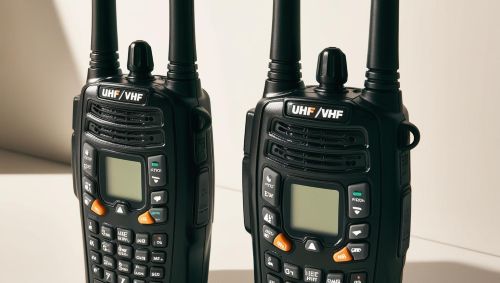
Simple strategies like low-power transmission (whisper mode), directional antennas, and limiting broadcast time reduce detection risks. Switching to Morse code (CW mode) or using burst transmissions minimizes exposure if standard radio waves are being jammed. Signal mirrors and light-based communication methods, such as heliographs or flashlight signaling, provide silent, long-distance visual signaling without electronic emissions.
Morse Code, Dead Drops, and Graffiti
Flashing signals using Morse code or prearranged patterns can send messages over miles in mountainous or open terrain. Infrared LED lights combined with night vision enable communication invisible to the naked eye, allowing covert signaling at night. Chemical light sticks with shutter covers or colored filters can mark locations or securely relay silent messages.
For ultra-covert communication, dead drops and hidden physical markers allow messages to be left in designated locations for later retrieval. Burying waterproof containers, hiding messages inside walls, or using magnetic drops attached to vehicles prevents real-time detection.
Graffiti, arranged objects, or coded symbols drawn in dirt, on fences, or in abandoned buildings can signal specific instructions without using electronics. This method is slow but nearly impossible to intercept unless the enemy already knows the system.
Field phones and wired communication lines using old landlines or improvised cable networks offer secure point-to-point communication in a localized area.
Unlike radio signals, wired communication cannot be intercepted remotely, making it valuable for underground networks or defensive positions. Military-style TA-312 or TA-1 field telephones, connected through simple wire networks, provide reliable, power-efficient communication that can operate without external infrastructure.
Messenger Couriers and Sound Signaling
Trained messenger couriers remain among the oldest and most secure forms of off-grid communication. A trusted individual carrying a memorized message, written note, or encrypted drive avoids electronic surveillance and jamming.
Using multiple couriers on different routes, false messages, or hidden compartments within clothing or vehicles reduces interception risks. In extreme conditions, trained animals such as pigeons can be used for message delivery, bypassing electronic warfare threats.
Sound-based signaling using whistles, drum beats, coded knocks, or prearranged sounds like bird calls allows teams to communicate discreetly. This method is effective in dense urban environments, forests, or tunnels, where radio signals struggle to penetrate. Tapping on pipes or knocking patterns can relay messages across buildings or underground locations, useful for covert operations or besieged areas.
When operating in a warzone, avoiding detection is as important as sending the message. Radio transmissions should be brief, spread across multiple frequencies, and performed from different locations to prevent triangulation.
Using low-power settings and directional antennas minimizes exposure. If digital methods are used, encryption should be standard, and any devices with identifying information should be wiped to prevent compromise.
The best off-grid communication method depends on the situation. Shortwave and ham radio are best for long-range coordination, mesh networks for localized encrypted texting, two-way radios for tactical communication, and dead drops or couriers for absolute security.
Combining multiple methods ensures resilience against jamming, surveillance, and interception. In a warzone, those who can communicate without being detected have the best chance of survival and coordination.
Are you prepared for an electronic blackout? Do you have a way to communicate off-grid? There was a massive blackout in Spain and Portugal today, April 28, 2025 causing them to declare a state of emergency. So, whole countries are faced with this dilemma. What plans do you have in case we have a grid-down issue in the United States or even Texas, which is on its own grid? Please reply below with your comment. I would love to hear from you. I always reply back.